
TrueView builds and manages professional turf-treatment programs — fertilization, weed control, soil health, core aeration and overseeding — for homeowners, HOAs, multifamily communities, commercial properties and professionally managed sites.
This is turf health, not mowing. Our lawn care program is about what goes into the soil and the grass plant, so your turf gets thicker, greener and more resilient season over season.
Homeowners • HOAs • Multifamily • Commercial • Managed Properties
Most struggling lawns in Southern Maryland aren’t suffering from a lack of mowing. They’re thin because the soil is compacted, the pH is off, nutrients aren’t available when the grass needs them, or weeds have taken the space that turf should be holding. Each of the services below addresses one of those root causes.
Nutrients delivered at the times of year the grass plant can actually use them.
Pre-emergent and post-emergent management of broadleaf and grassy weeds.
Soil plugs removed to relieve compaction and reopen the root zone.
New seed introduced into existing turf to rebuild density and cover thin areas.
Soil testing, pH correction and lime applications so nutrients stay available.
A healthy lawn is the result of the right treatment applied at the right time — not a bag of fertilizer thrown down whenever someone remembers. Cool-season turf in Southern Maryland goes through a predictable cycle every year: it wants to grow in spring, it fights heat and drought stress through July and August, and it does its most important recovery and root work in the fall. Treatments that ignore that cycle waste product and rarely produce lasting results.
The TrueView Lawn Care Program is built around that calendar. We evaluate the property first, establish what the turf actually needs, and then schedule treatments so each one lands when it will do the most good. Between visits we’re watching how the lawn responds and adjusting the plan rather than repeating the same application by default.
Every program starts with an evaluation. We look at the lawn before we quote it, then build the treatment schedule around what that specific turf needs and what the season calls for — rather than selling a fixed package sight unseen.
Fertilization is the part of lawn care people think they understand, and it’s the part most often done at the wrong time. Nitrogen applied in the heat of summer pushes soft top growth exactly when the plant should be conserving energy. The same nitrogen applied in fall goes into root mass and carbohydrate storage that carries the lawn through the following season.
Deeper, denser root systems reach moisture and nutrients further down, which is what separates a lawn that survives a Maryland August from one that goes backwards every year.
A well-fed stand of grass fills in laterally and produces more shoots per square foot. Dense turf is the most effective weed control there is — there’s simply no open ground for weeds to occupy.
The goal is consistent growth the plant can support, not a two-week surge followed by stress. Balanced feeding produces turf that mows cleanly and recovers quickly.
Deep, even green is a byproduct of adequate nitrogen and available iron. When color is patchy or pale, it usually points to a nutrient or soil issue worth diagnosing rather than simply covering up.
Drought, heat, heavy traffic, insect damage and disease all take turf backwards. Properly timed fertility gives the lawn the resources to fill those areas back in on its own.
What the turf needs in April is not what it needs in September. Each application in the program is selected for the conditions and the growth stage the lawn is in at that time.
Maryland regulates how and when professional fertilizer is applied to turf, including annual nitrogen limits, restrictions on phosphorus without a soil test, and a statewide blackout period in late fall and winter. We build our program to operate inside those requirements rather than around them — see the licensing section below.
Effective lawn weed management is a two-part job. The larger share of the work happens before you ever see a weed, through properly timed pre-emergent applications. The rest is targeted follow-up on what establishes anyway.
Applied ahead of germination to create a barrier in the top layer of soil. Timing is everything — crabgrass germinates once soil temperatures hold in the mid-50s, which in Southern Maryland typically means the application has to be down before the lawn looks like it needs anything at all.
Targeted applications on weeds that are already growing, selected for the weed species present and applied when the plant is actively taking material in rather than shut down by heat or drought.
Dandelion, clover, plantain, chickweed, henbit, ground ivy and wild violet are the recurring problems in this region. Several of these are perennial and require more than one treatment to fully control.
Crabgrass, goosegrass, foxtail and nutsedge behave differently from broadleaf weeds and need different products and timing. Crabgrass in particular is far cheaper to prevent in spring than to chase in July.
Weed pressure changes through the year. We note what’s present at each visit so the next treatment addresses what’s actually on the property rather than what was there in March.
Chemistry manages the current population; turf density prevents the next one. That’s why weed control on this program runs alongside fertility, aeration and overseeding rather than standing on its own.
Much of Southern Maryland sits on heavy clay soil. Clay holds nutrients well, but it compacts easily — and once it does, the pore space that air, water and nutrients travel through collapses. Add foot traffic, mowing equipment, construction backfill around newer homes and a few wet springs, and the top few inches of soil become dense enough that roots stop pushing downward.
Compacted turf shows it: water runs off instead of soaking in, the lawn browns quickly in dry weather, fertilizer produces less response than it should, and thin areas keep reappearing in the same spots. You can apply everything correctly and still see limited results, because the treatments can’t physically reach where they need to go.
Spike aerators push soil sideways and can make compaction worse at the edges of each hole. Core aeration physically removes plugs of soil and thatch from the lawn and deposits them on the surface, creating open channels that stay open. Those channels let oxygen, water and nutrients move down into the root zone, and the plugs break down over the following weeks, returning soil and microbial activity to the surface.
The result is a root zone that can actually expand. Roots follow the new pore space downward, thatch breaks down faster, and every other treatment in the program — fertility, lime, seed — gets a better return.
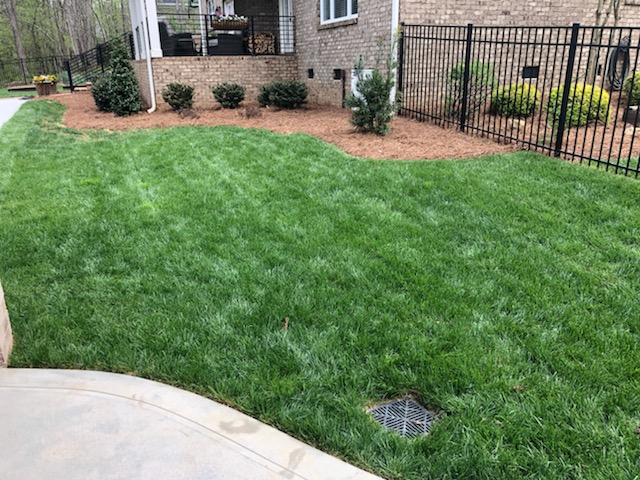
If a lawn in this region is going to be renovated, fall is when it happens — and aeration paired with overseeding is the treatment that does the most work. Done together, in the right window, the two services accomplish something neither one does alone.
Tall fescue and other cool-season grasses that make up most Southern Maryland lawns take real damage between June and September. Extended heat, humidity, drought stretches and disease pressure kill off individual plants. Because these grasses spread very little on their own, the turf doesn’t automatically refill those gaps — the stand simply gets thinner every summer unless new plants are introduced.
Layer in shade, heavy traffic, pet damage, construction-era subsoil and years of compaction, and you get the familiar pattern: bare patches near walkways and parking areas, thin strips along driveways, and a lawn that looks worse each August than it did the one before.
Seed broadcast over an established, compacted lawn mostly sits on top of thatch, dries out and never establishes. That’s why overseeding on its own so often disappoints. Aerating first changes the equation: every core pulled leaves an open hole of moist, exposed soil, and seed that falls into those holes has the contact, moisture retention and protection it needs to germinate and root.
Timing: In Maryland, the reliable window for aeration and overseeding of cool-season turf runs from roughly late August through mid-October, when soil is still warm enough for fast germination and the new seedlings have cool weather and fall moisture to establish in. Spring seeding is possible but works against summer heat and limits what pre-emergent weed control can be applied.
Standalone or in the program. Aeration and overseeding can be scheduled as a one-time fall service, or built into the TrueView Lawn Care Program on the cycle your property needs. Lawns under heavy traffic or on compacted clay generally benefit from a regular interval; lower-stress lawns may need it less often. We’ll tell you which category your property is in after we look at it.
It is entirely possible to fertilize a lawn correctly, on schedule, with quality product, and see very little for it. When that happens, the soil is almost always the reason. Nutrients can be present in the soil and still be unavailable to the plant if the chemistry isn’t right — and in this part of Maryland, it frequently isn’t.
Soils across Southern Maryland tend to run acidic. As pH drops below the range cool-season turf prefers, nutrients you’ve already paid to apply get locked up and the grass can’t take them in. Correcting that is usually the highest-return, lowest-cost improvement available on a struggling lawn, and it’s the first thing we look at when results don’t match the inputs.
Soil testing also matters on the compliance side: under Maryland’s turfgrass fertilizer regulations, phosphorus generally cannot be applied to established lawns without soil test results supporting the need. Testing is how a program stays both effective and compliant.
Most homeowners who call us have already tried doing it themselves. The bags from the big-box store are inexpensive; the hard part is knowing which one, at what rate, and in what week — and getting it wrong is how you end up with burn stripes, a crabgrass year, or a lawn that looks great in May and terrible by July.
Handing the lawn to a program takes the guesswork out. We evaluate what your specific lawn needs, apply the right treatment at the right time, and tell you plainly what we’re seeing and what to expect next.
Density and weed pressure are two sides of the same coin. As the stand fills in, the weeds have nowhere left to go.
Even, deep green across the whole lawn — not a patchwork of dark streaks where the spreader overlapped.
Shade lines, dog spots, traffic paths and heat damage addressed through aeration, overseeding and targeted soil work.
Pre-emergent goes down before crabgrass germinates, not after. Seed goes down in the fall window, not in June.
No calendar to keep, no rates to calculate, no half-used bags in the garage, no wondering whether it’s too hot to spray.
If your lawn needs renovation rather than another round of fertilizer, we’ll say so instead of selling you applications that won’t fix it.
Turf condition is one of the most visible measures of how a property is being managed. It’s also one of the most common line items to appear in a landscape RFP — and one of the most common to be quietly under-delivered once the contract is signed.
TrueView provides turf-treatment programs for property managers, HOA and community association managers, multifamily communities, office and retail properties, institutional sites and other professionally managed properties across Southern Maryland. We’re accustomed to working within defined scopes, fixed schedules, insurance and documentation requirements, and the reporting expectations that come with managing a portfolio rather than a single address.
Property managers and contractors: contact us directly for turf-care pricing, square-footage-based proposals, or to include TrueView in an upcoming RFP or bid package.
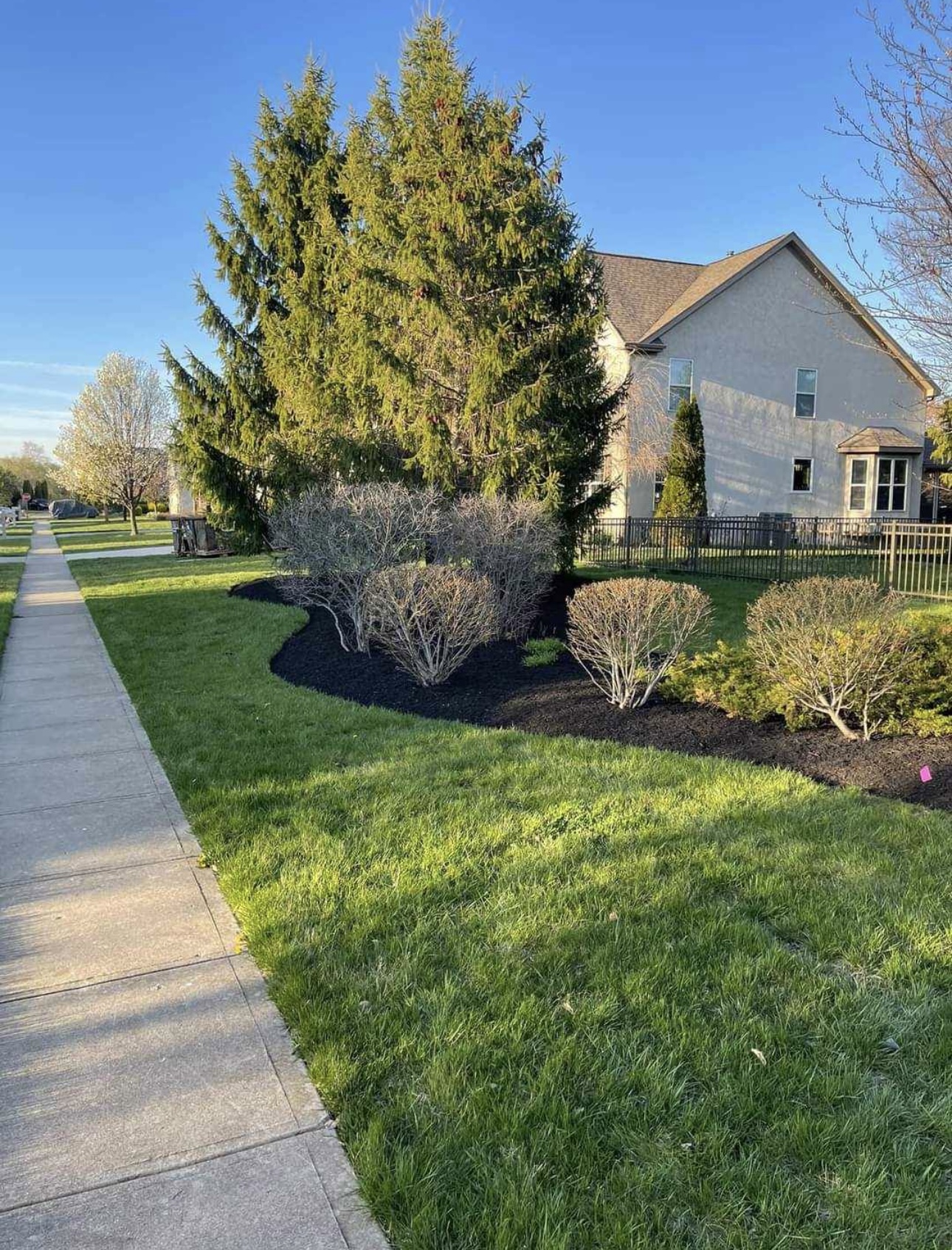
Common areas, entrances, amenity spaces and streetscape turf that boards and residents judge the whole property by. See our HOA landscaping services.
Turf across leasing-office frontage, courtyards and resident lawns, where appearance directly affects tours and renewals.
Frontage and campus turf treated on a schedule that keeps the property presentable through the full season.
High-visibility, high-traffic turf areas around parking fields, outparcels and entrances.
Churches, schools, medical and municipal sites with larger turf areas and defined access and scheduling requirements.
Multiple properties under one management company, coordinated on a single treatment schedule and reporting structure.
Applying fertilizer and pesticide products to turf in Maryland is regulated work. Companies that do it are required to be licensed through the Maryland Department of Agriculture, and the individuals applying product are required to be certified — or to work under the direct supervision of someone who is.
TrueView Landscaping is licensed through the Maryland Department of Agriculture to perform professional turf treatments. That matters for two reasons: it means the person treating your lawn has been tested on rates, timing, product handling and environmental protection, and it means your property is being serviced by a company operating inside Maryland’s nutrient-management and pesticide regulations rather than outside them.
For commercial clients and property managers, licensing documentation and certificates of insurance are available on request for your files, RFP submissions or vendor-compliance requirements.
Property managers are usually accountable to someone else — a board, an owner, a regional manager, an auditor. Turf work that isn’t documented is difficult to defend at a budget meeting and impossible to reference a year later. Where applicable, commercial clients can receive written service documentation for each treatment visit.
When the visit occurred, so the treatment record lines up with the contracted schedule.
Which turf areas of the property received treatment on that visit.
What was applied or performed, recorded for your files.
What our crew saw on site — weed pressure, drought stress, disease symptoms, damage, irrigation issues.
What we’d suggest addressing next, so budget conversations start with information instead of guesswork.
What’s scheduled next and roughly when, so you can answer residents and stakeholders before they ask.
These are two different services with different crews, different equipment and different outcomes. Most properties need both — but confusing them is why so many well-mowed lawns are still thin and full of weeds.
Improving the health and density of the grass itself through applied treatments.
Keeping the property groomed, tidy and presentable on a recurring visit schedule.
A lawn care program is a scheduled series of turf treatments through the growing season rather than a single service. Ours includes fertilization timed to the season, pre-emergent and post-emergent weed control, turf monitoring at each visit, soil health work such as testing and lime where results call for it, and core aeration and overseeding when the lawn’s condition warrants it. It does not include mowing.
Lawn maintenance is the grooming work — mowing, edging, trimming, bed care and cleanups — that keeps a property looking tidy. Lawn care, or turf treatment, is the applied work that changes the health of the grass itself: fertilization, weed control, soil correction, aeration and overseeding. A property can be mowed perfectly every week and still have thin, weedy turf, because mowing doesn’t address soil, nutrition or density. If you’re looking for the grooming side, see our commercial landscape maintenance services.
For the cool-season grasses that make up most Maryland lawns, early fall is the ideal window — roughly late August through mid-October. Soil is still warm enough for quick germination if you’re seeding, and the new turf has cool weather and fall moisture to establish in before winter. Spring aeration is possible, but it works against the coming summer and limits what pre-emergent crabgrass control can be used.
Aeration relieves soil compaction and opens channels for air, water and nutrients to reach the root zone. Overseeding introduces new grass plants into an existing lawn. Done together, the holes left by aeration give the seed the soil contact and moisture it needs to actually germinate, which is why the combination works far better than seeding alone. The result is thicker turf, repaired thin and bare areas, improved drought and disease tolerance from newer seed varieties, and fewer weeds over time.
It depends on the grass type, the soil, the condition of the lawn and how it’s being used — and in Maryland it’s also governed by state regulations that cap how much nitrogen can be applied per application and per year, and that prohibit applications during a late-fall and winter blackout period. Rather than a fixed number, we set a schedule based on what your lawn needs and what the regulations allow.
Yes. Turf treatment is one of our core commercial services. We work with property managers, HOA and community association managers, multifamily communities, office and retail properties and institutional sites throughout Southern Maryland. Turf care can be provided as a standalone program, alongside a full commercial landscape maintenance scope, or bid as a defined line item within an RFP or landscape specification.
Yes. Lawn care is one service where we work with homeowners as well as commercial clients. Residential lawns get the same program approach: an evaluation first, then properly timed treatments through the season, with aeration and overseeding when the lawn needs it.
No — this is a treatment-based program and mowing is a separate service. Many clients keep their existing mowing contractor and bring us in strictly for turf treatments. For commercial and HOA properties that want both under one contractor, mowing falls under our commercial landscape maintenance program and can be coordinated with the treatment schedule.
We provide lawn care and turf treatment throughout Southern Maryland, including Waldorf, La Plata, Brandywine, Hughesville, Clinton, Accokeek, Bowie and Indian Head, and the surrounding communities. If you’re not sure whether your property is in range, get in touch and we’ll let you know.
Yes. Professional turf treatments in Maryland require licensing through the Maryland Department of Agriculture, and applicators must be certified or working under the direct supervision of a certified applicator. Licensing documentation and certificates of insurance are available on request for commercial clients and vendor-compliance files.
Every program starts with someone looking at the actual lawn. We’ll assess turf density, weed pressure, soil condition and compaction, identify what’s holding the lawn back, and put together a treatment plan and pricing for your property.
Property type
Residential • HOA / Community Association • Multifamily • Commercial • Other
Services needed
Lawn Care Program • Fertilization • Weed Control • Core Aeration • Overseeding • Aeration + Overseeding • Soil Testing / Soil Health • Other
Property managers and contractors: contact us for turf-care pricing or to include TrueView in an RFP or bid package. Call (240) 346-2586 or request a quote below.
Related services: Commercial Landscape Maintenance · HOA Landscaping · Contact / Request a Quote
Tell us about the property and what you’re looking for. We’ll schedule a lawn evaluation, walk the turf with you, and come back with a treatment plan and pricing.
Residential, HOA, multifamily and commercial properties are all welcome. Property managers and contractors can use the same form to request turf-care pricing or to include TrueView in an RFP.